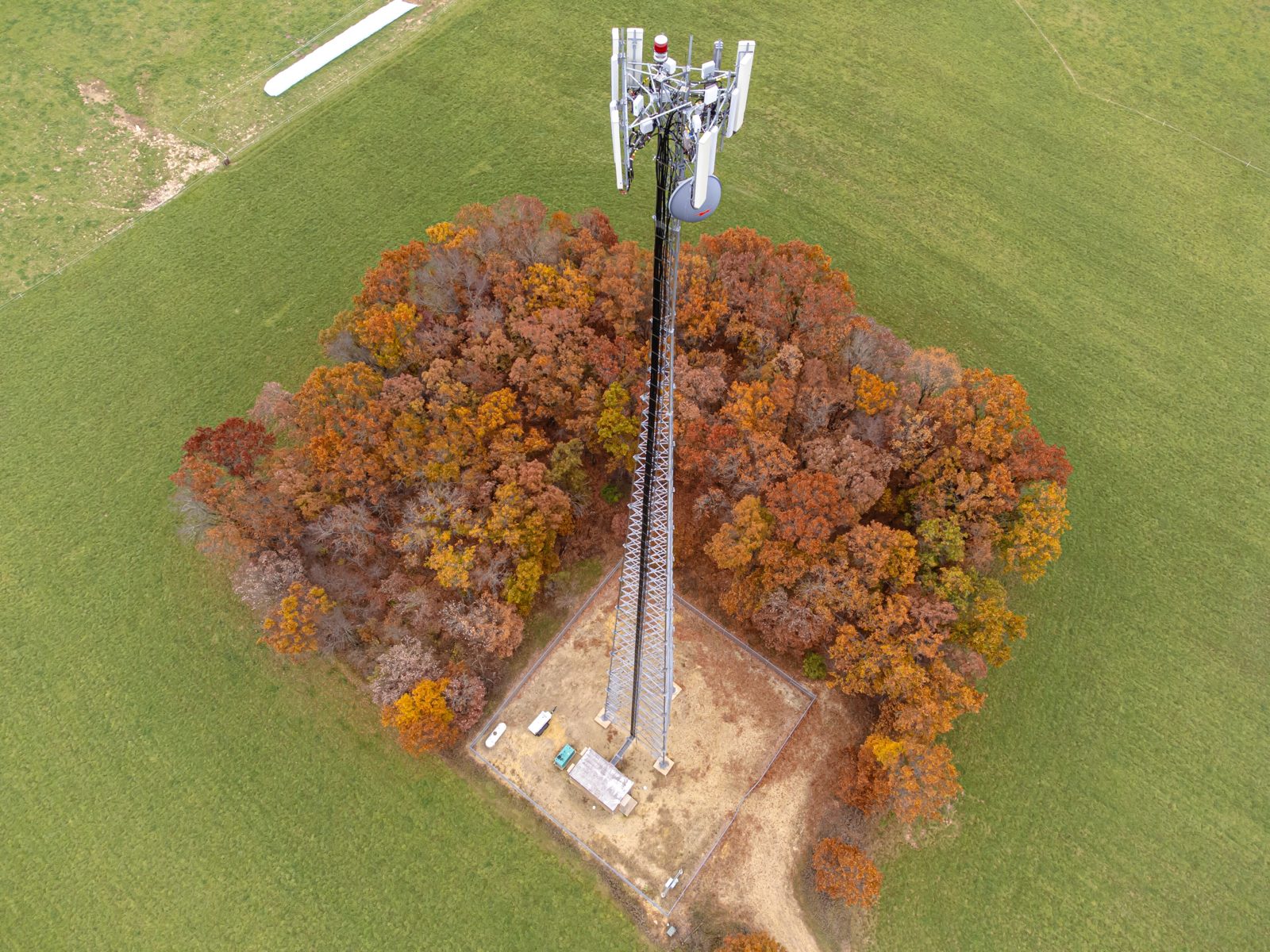
Telecom civil work looks straightforward from the road — a fenced compound with a tower and a few cabinets — but getting to that finished state involves a surprising amount of coordinated construction. Landlords, tower companies, and carriers each have their own requirements, and a tower foundation contractor has to satisfy structural, electrical, and regulatory standards simultaneously, often on a compressed schedule. Here's what actually happens between site acquisition and a tower going live.
Site acquisition handoff
By the time construction begins, the site has typically already gone through lease negotiation, zoning or conditional-use approval, and a structural or radio-frequency design package from the tower company or carrier. The construction team inherits a set of stamped drawings, a geotechnical report, and often a tight window to complete the build before an activation deadline. Reviewing that package for constructability issues before mobilizing crews saves real time later.
Access road construction
Many tower sites sit on land with no existing road, so an all-weather access road is often one of the first items built. It has to support heavy crane and concrete truck traffic during construction and lighter maintenance traffic for the life of the site, which usually means a gravel or aggregate base sized for the soil conditions found on-site, with culverts or drainage crossings where needed. Where the access route crosses easements or shared driveways, coordinating temporary construction access with neighboring landowners early avoids delays once equipment mobilizes.
Compound grading and fencing
The compound itself is graded and often finished with crushed stone to control vegetation and drainage around the tower base and equipment. Chain-link fencing with a locking gate secures the compound to tower-industry and carrier security standards, and grading has to account for positive drainage away from the foundation and equipment pads so water never pools against structures. Temporary erosion control measures stay in place until vegetation is stabilized or the crushed stone finish is complete, and silt fencing is checked after every significant rain event during construction.
Foundation types
The foundation depends on tower type and soil conditions identified in the geotechnical report:
- Drilled pier foundations are common for self-support and monopole towers, using a reinforced concrete shaft drilled to design depth.
- Mat foundations spread structural load across a larger reinforced concrete slab, often used where soil bearing capacity is lower or the tower type calls for it.
- Guyed tower anchors require individual anchor foundations at each guy wire point, positioned precisely per the structural design, in addition to the center foundation.
Concrete curing time before steel erection can begin is one of the more schedule-sensitive steps in the whole build, and rushing it is not an option a responsible contractor takes.
Equipment pads, shelters, and grounding
Concrete equipment pads or a prefabricated shelter foundation are built to carrier specifications, along with ice bridges or cable trays that route coax and fiber between the tower and the equipment. A ground ring with ground rods encircles the compound and ties into the tower, equipment, and fencing per grounding standards — this is inspected closely, since it protects both the equipment and anyone working on-site from lightning strikes.
Utilities and power
Commercial power and, increasingly, fiber backhaul need to be brought to the compound, which usually means coordinating trenching and conduit installation with the local utility and fiber provider well ahead of the activation date. Backup generator pads and fuel containment, where required, are built into this same phase. This is one of the areas where our utilities and telecom crews coordinate directly with providers to keep the schedule on track.
Coordinating with the tower crew
On most projects, a separate tower erection crew handles steel assembly and antenna mounting once the foundation has cured, which means the civil contractor's schedule has to hand off cleanly to theirs. Confirming foundation dimensions, anchor bolt patterns, and grounding connections against the structural drawings before the tower crew mobilizes prevents costly rework once steel is in the air.
Closeout for carriers
Before a site is turned over, it typically requires a structural inspection, grounding test results, as-built survey, and photo documentation package matching carrier and tower-company closeout standards. Punch list items are resolved before the site is accepted, since carriers generally will not activate equipment on an incomplete or undocumented build.
Tower site construction rewards contractors who treat it as the specialized combination of civil, structural, and electrical work that it is, not a generic small job. Vega Tower Ventures builds these compounds start to finish, from access road through carrier closeout. If you have a tower site on the schedule, get in touch to talk through your timeline and site conditions.